 WILD ALENTEJO
Semi-arid regeneration since 2023
WILD ALENTEJO
Semi-arid regeneration since 2023
WILD ALENTEJO
Semi-arid regeneration since 2023
WILD ALENTEJO
Semi-arid regeneration since 2023
Trying to return cover and life to exposed soil in the semi-arid Alentejo.
In the Baixo Alentejo, irregular rainfall, summers above 40°C and shallow schist soils make recovery slow. On this land, the problem is not solved all at once: I start by noticing where soil is exposed, where water runs off and what can still stay alive.
Many soils exposed to disturbance and little cover lose organic matter and structure. During rain events, runoff can increase; on very hot days, bare soil can reach very high surface temperatures.
The result is a vicious cycle: without vegetation, soil degrades. Without soil, vegetation cannot grow.
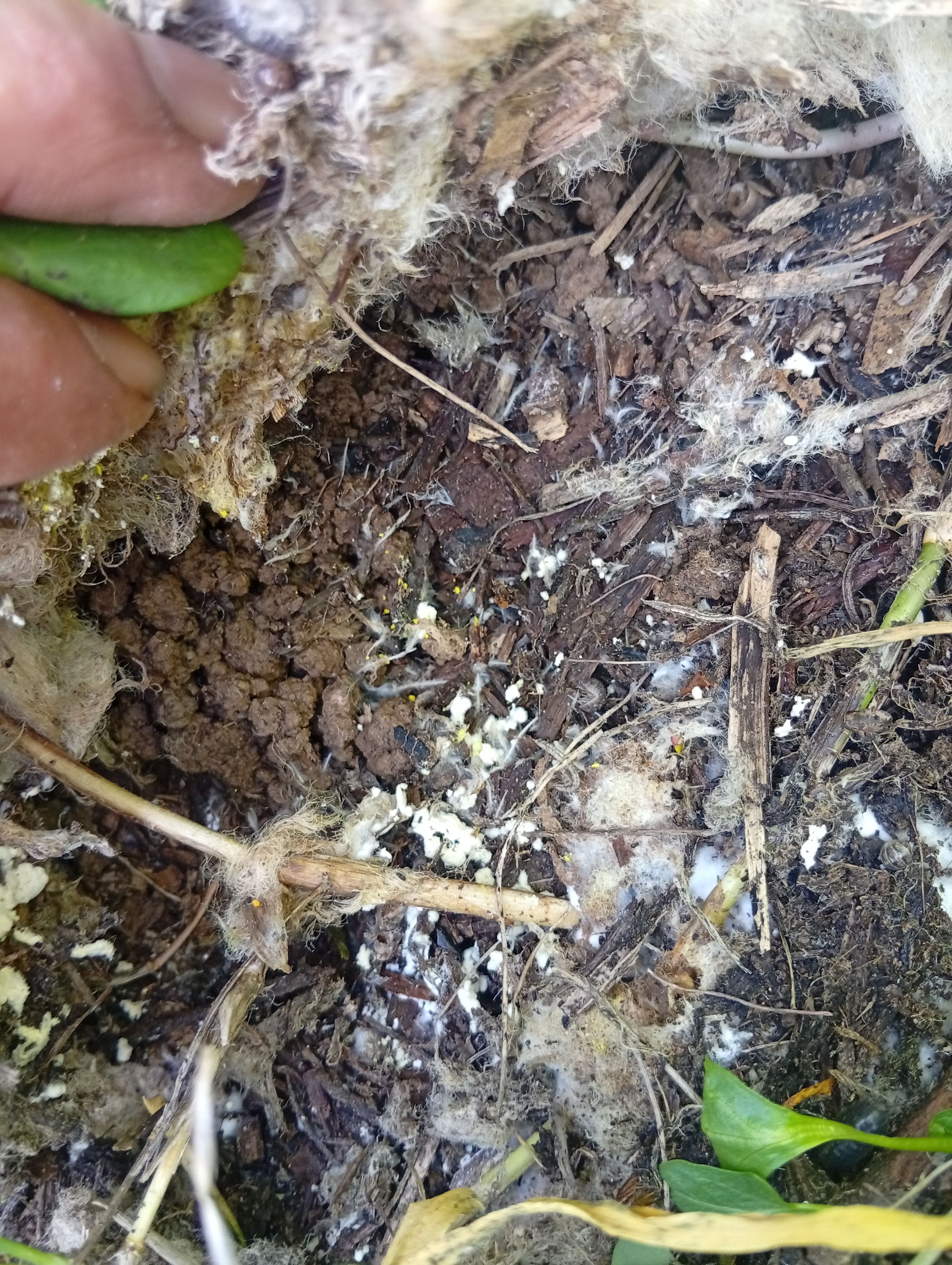
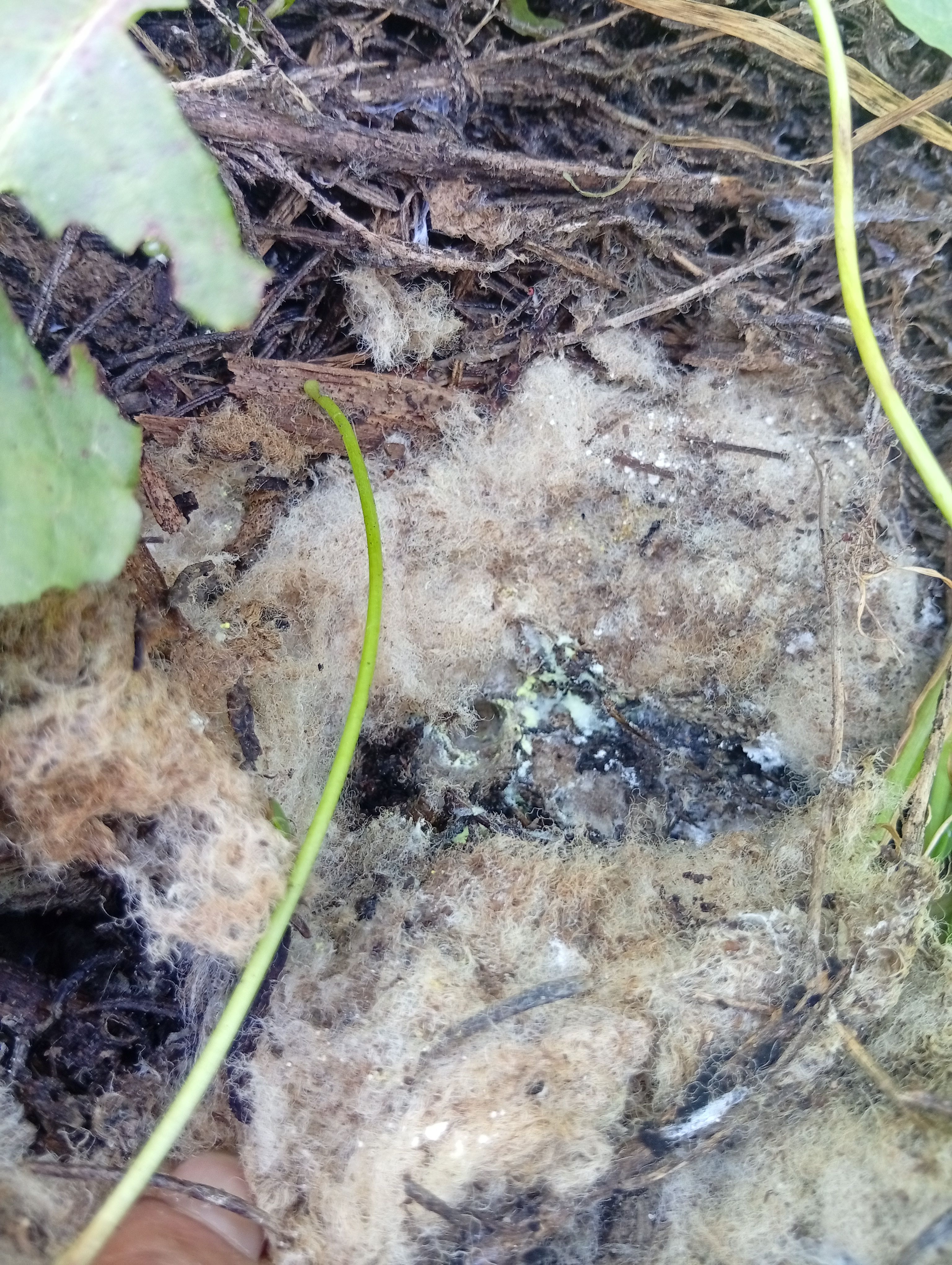
Climate normals and regional studies describe Mértola as a setting with low annual rainfall concentrated in winter, alongside long hot summers. On site, schist soils commonly have limits of depth, stone and water retention; the stated pH is an indicative field reading.
It is a demanding setting for regeneration. The results observed here are promising for Mediterranean sites with similar constraints, but they always depend on each plot’s soil, water, species, management and microclimate.
Climate reference: IPMA climate normals. The pH is an indicative reading taken on site.
The practices are followed in the field; their effects vary with season, soil, water and management.
What I do here is a regeneration practice under test. Each decision aims to return organic matter, protect soil and follow moisture and visible life in the system over time.
The working hypothesis is simple: soil should stay covered for as much of the year as possible. I use biomass mulch, sheep wool and living cover to reduce solar exposure and observe whether the microclimate close to the surface changes.
Stratification pruning returns biomass to the soil. Rather than assume effects on carbon, fungi or water, I follow the response over time.
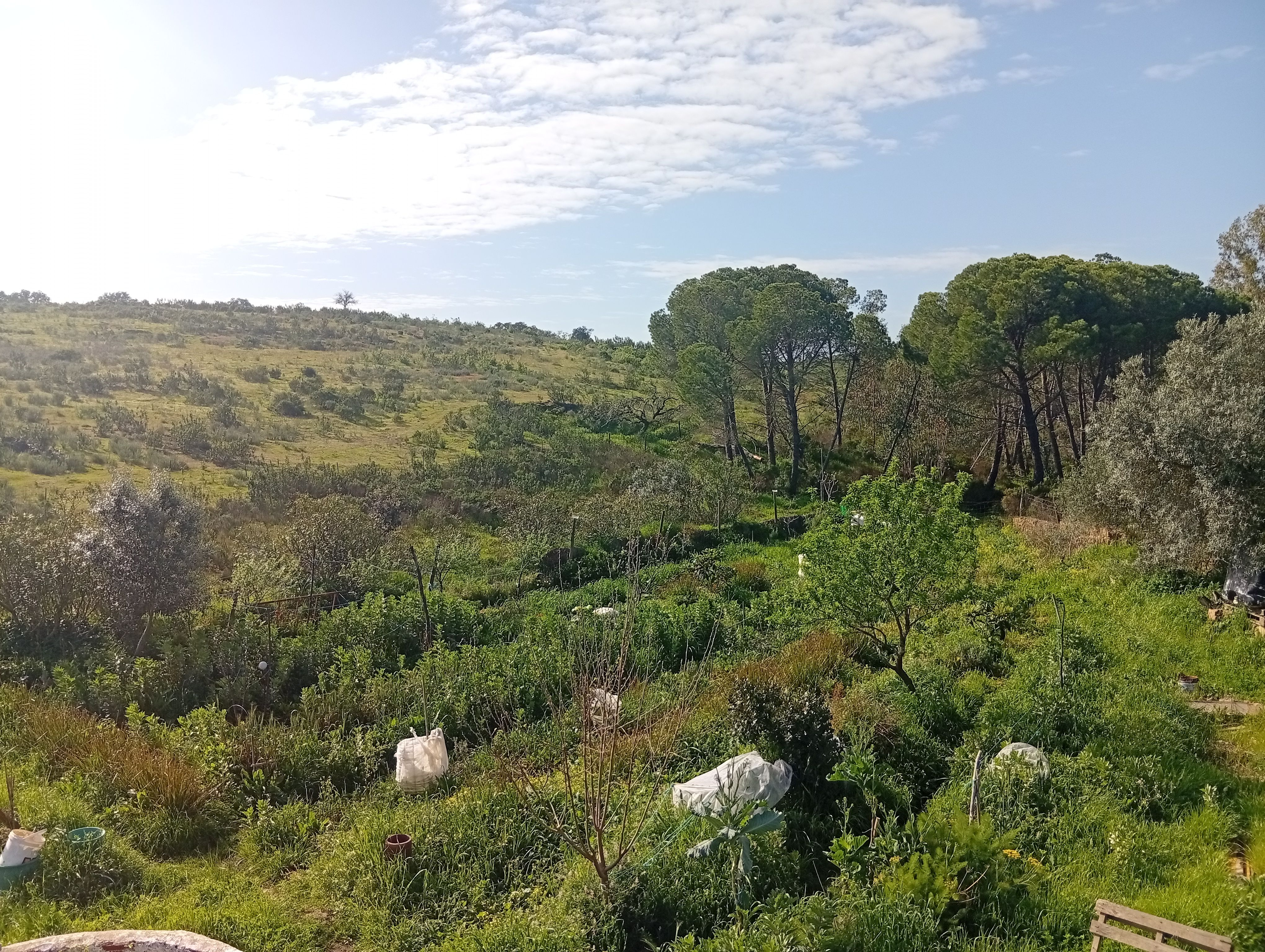
Biomass mulch, sheep wool and living cover. The goal is to reduce periods of exposed soil, adjusting cover to rainfall and water competition.
Pioneer biomass cut and returned to the soil. Organic inputs and soil response are followed without assuming a closed carbon cycle.
Working hypothesis: lower disturbance and organic-matter input may support fungal activity in the soil.
13 hens in rotation: a management hypothesis for redistributing organic matter; compaction, cover, vegetation recovery and pressure on insects are observed.
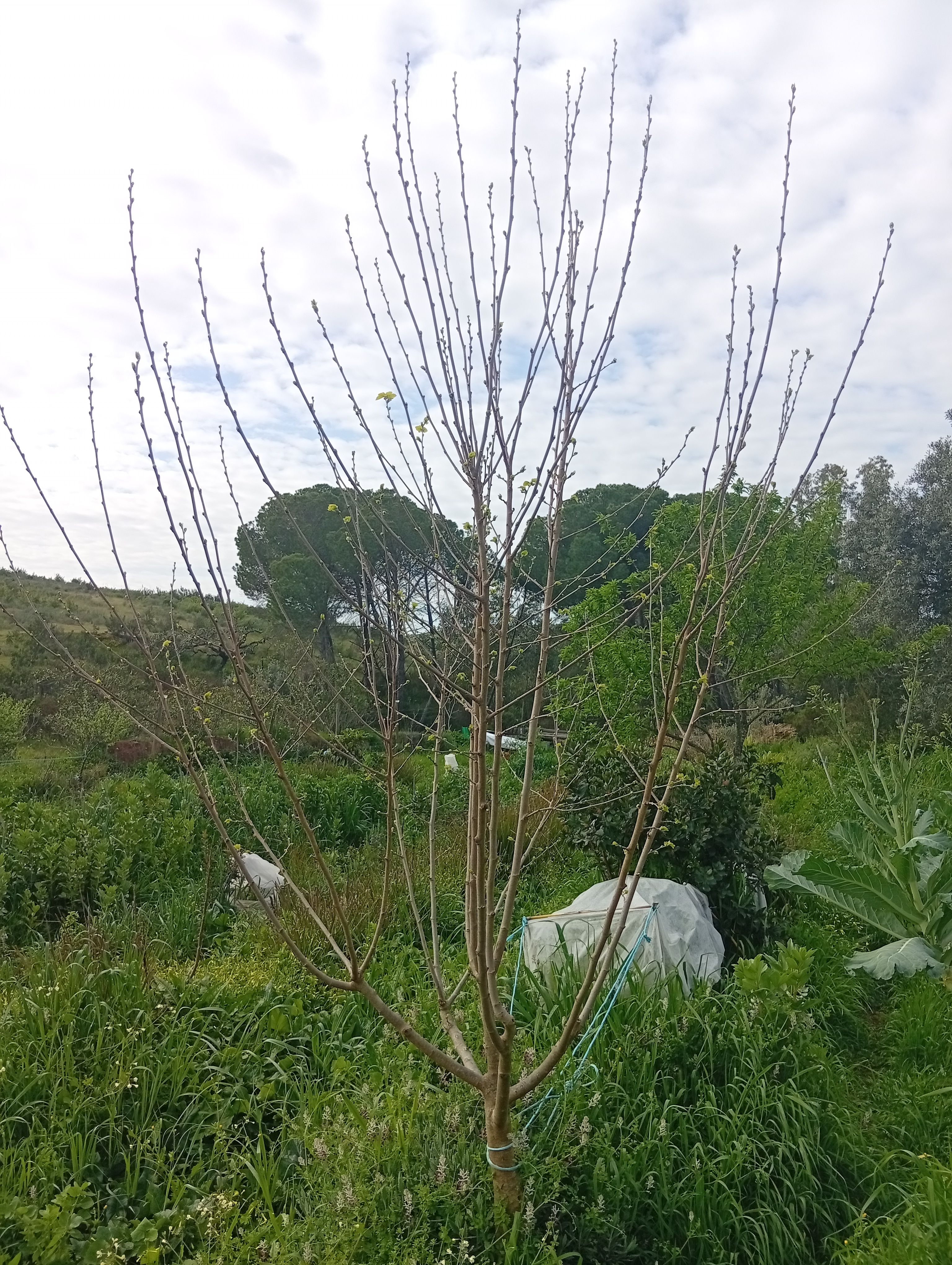
Each species has a proposed role in the system beyond fruit or shade. These functions depend on site, water and management and are followed in the field.
This section separates point readings, counts and visual observations. It does not replace a replicated trial or laboratory soil analysis.
Field measurement: in point readings taken in August, covered surfaces showed values up to 26°C below comparable bare-soil areas. This is neither a climate average nor a continuous series.
Field observation: during intense rainfall, covered areas showed less visible runoff than nearby bare soil. Infiltration has not yet been measured with a standardised test.
Field count: in point samples, 12–15 earthworms per spade were observed in areas with thick mulch. This is a visual indicator, not a complete analysis of soil biology.
Field observation: a humus layer is forming beneath mulch, with visible changes in colour and structure between 2022 and 2025. There is not yet a formal laboratory analysis.
The field record shows what changes, what fails and the decisions each season requires.