 WILD ALENTEJO
Semi-arid regeneration since 2023
WILD ALENTEJO
Semi-arid regeneration since 2023
WILD ALENTEJO
Semi-arid regeneration since 2023
WILD ALENTEJO
Semi-arid regeneration since 2023
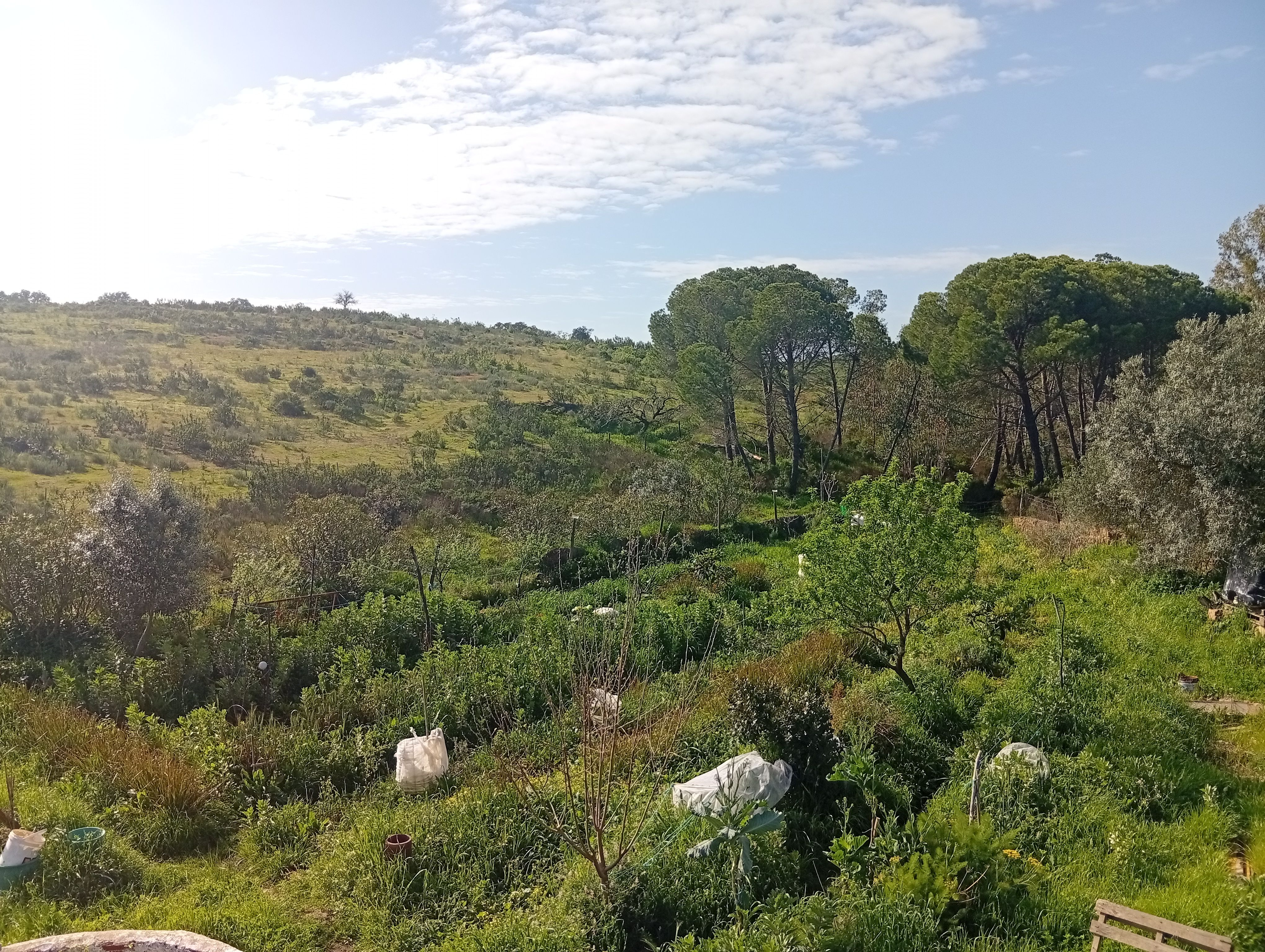
Area, species, active years and the absence of herbicides are Wild Alentejo management records; they are not external certification or laboratory assessment.
The principles presented guide system management and should be adjusted to the soil, water, microclimate and succession observed on site.
I use syntropic agroforestry principles as a working language, not a closed recipe. I test soil cover, vegetation strata and returning biomass, then observe how each choice responds to the climate, soil and water available here.
In Mértola, where summer is hot and dry, I have to decide carefully where water goes and which plants receive attention first. Bare soil tends to heat up and become more exposed; the effect of each cover depends on species, season, rainfall and management.
Each intervention is a hypothesis I follow: pruning redistributes light and returns biomass to the soil; chickens in controlled rotation may redistribute organic matter. I observe the effects in the field rather than assuming they are automatic.
Biomass and wool mulch aim to protect the surface, reduce solar exposure and add organic inputs. Effects on mycorrhizal fungi have not been measured.
Canopy, sub-canopy, shrubs, herbaceous and ground cover simultaneously.
Drip irrigation, real-time well monitoring via IoT.
13 hens in rotation: a management hypothesis for redistributing organic matter; cover, compaction and vegetation recovery are observed.
The photographs document moments in the field system; they provide visual context and change over time, but do not replace comparative measurements.
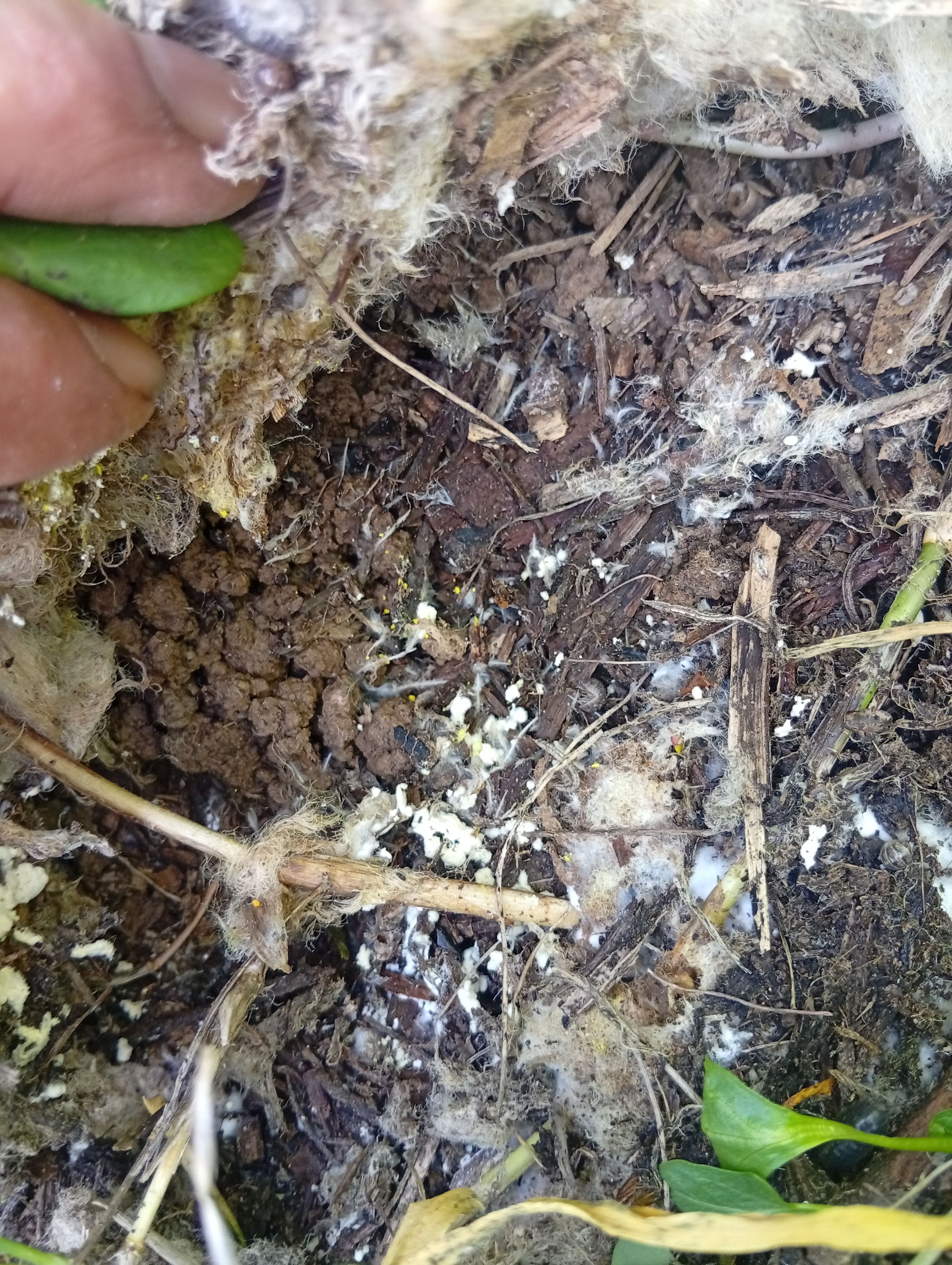
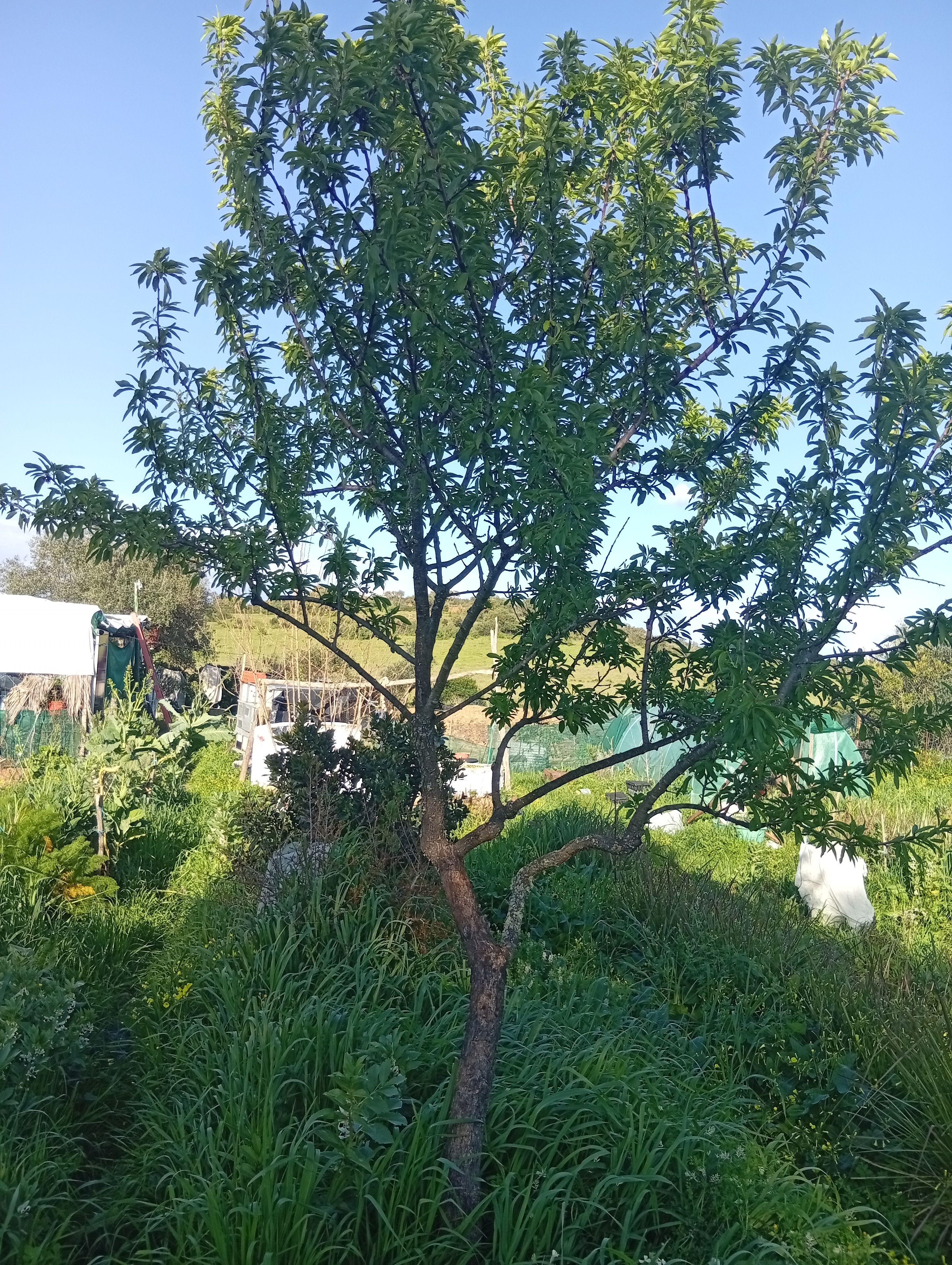
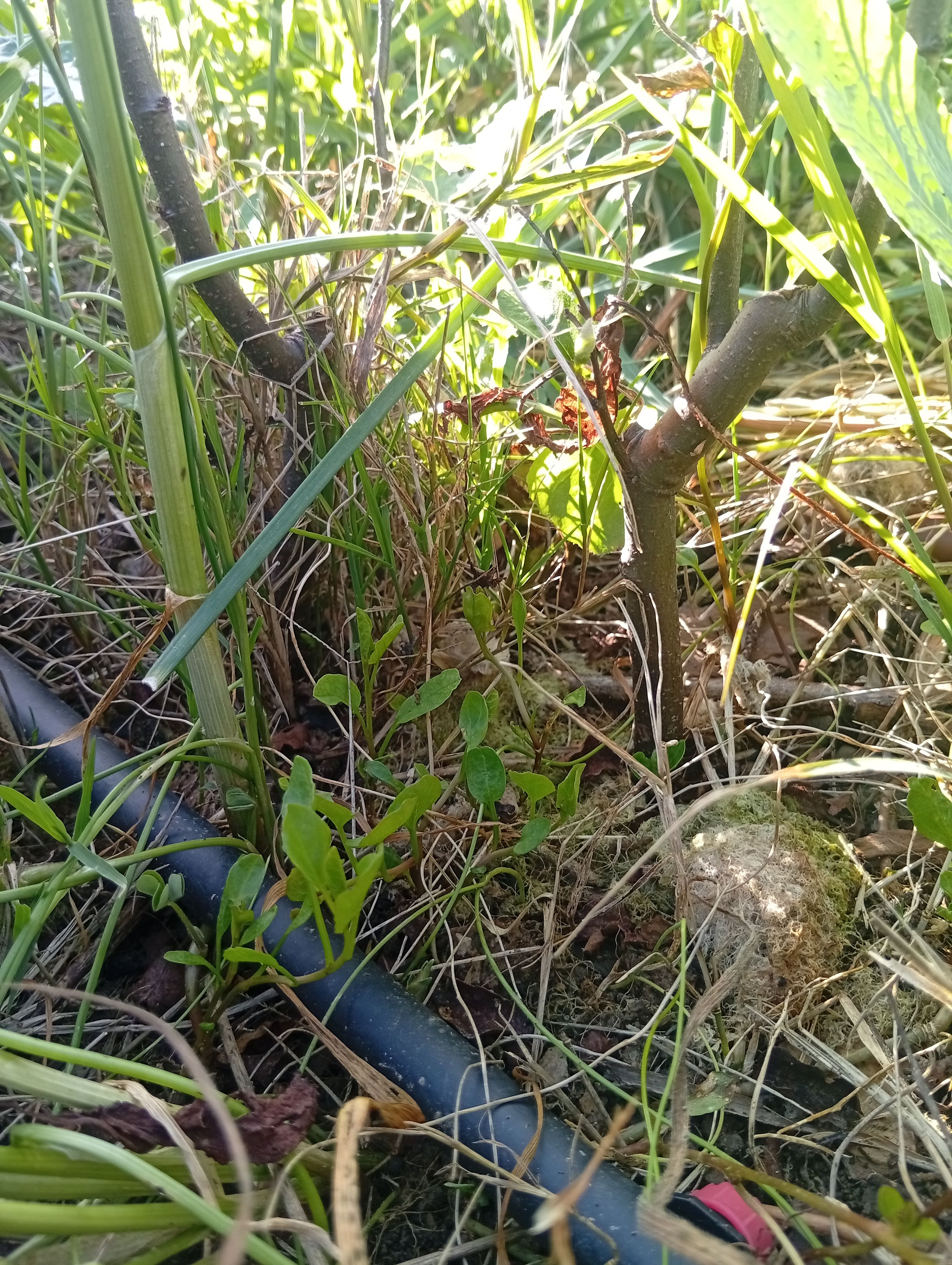
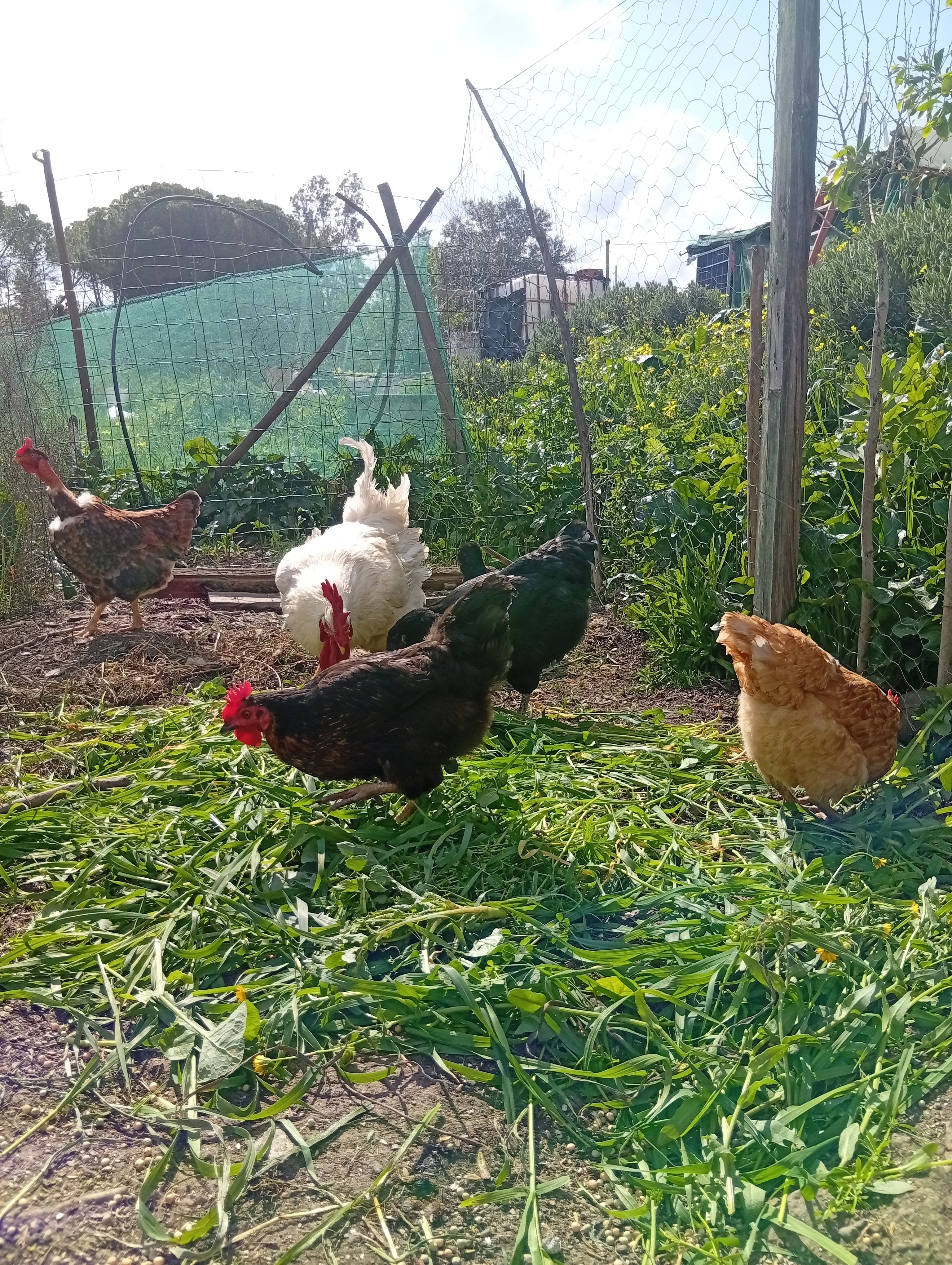
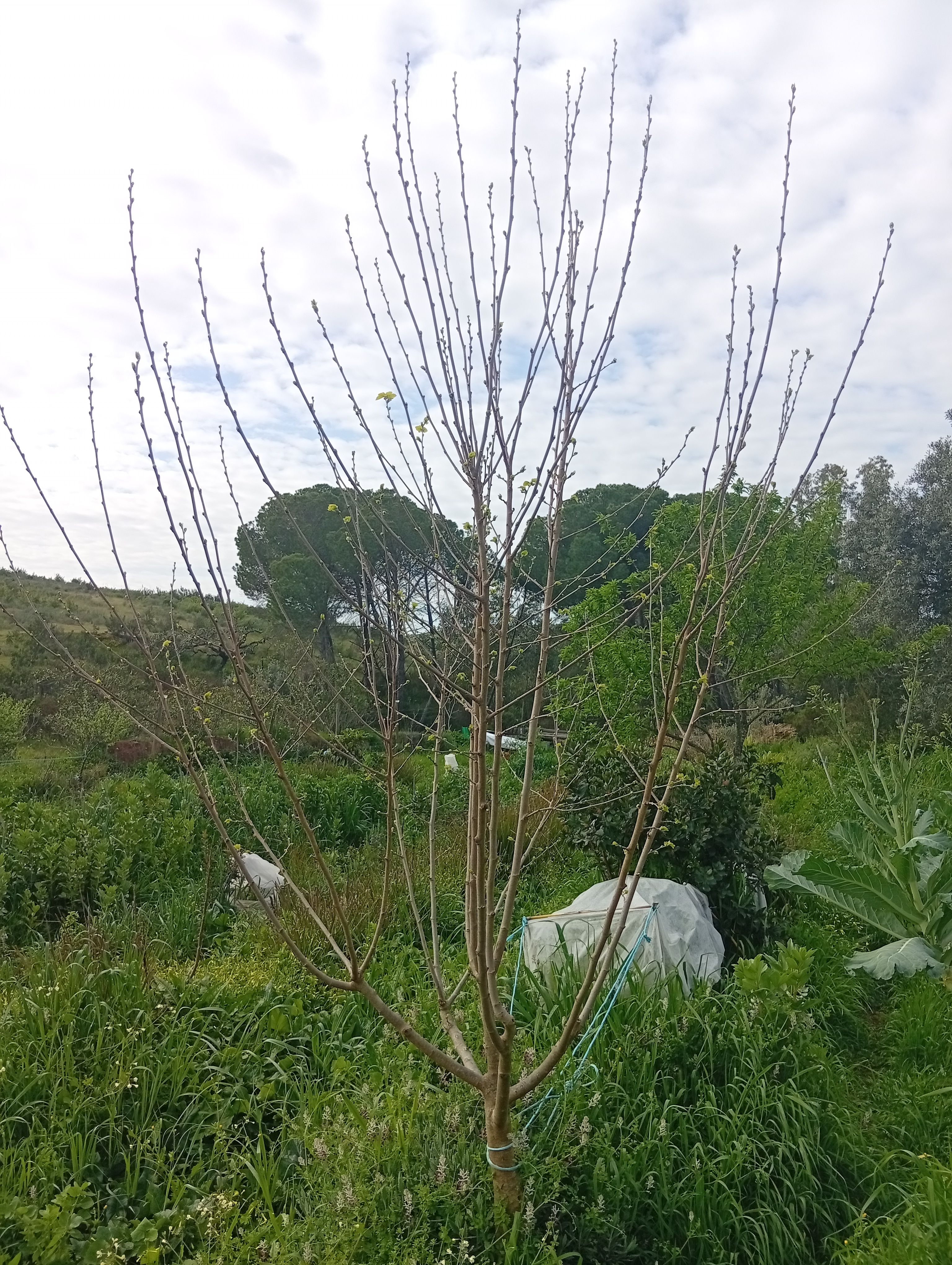
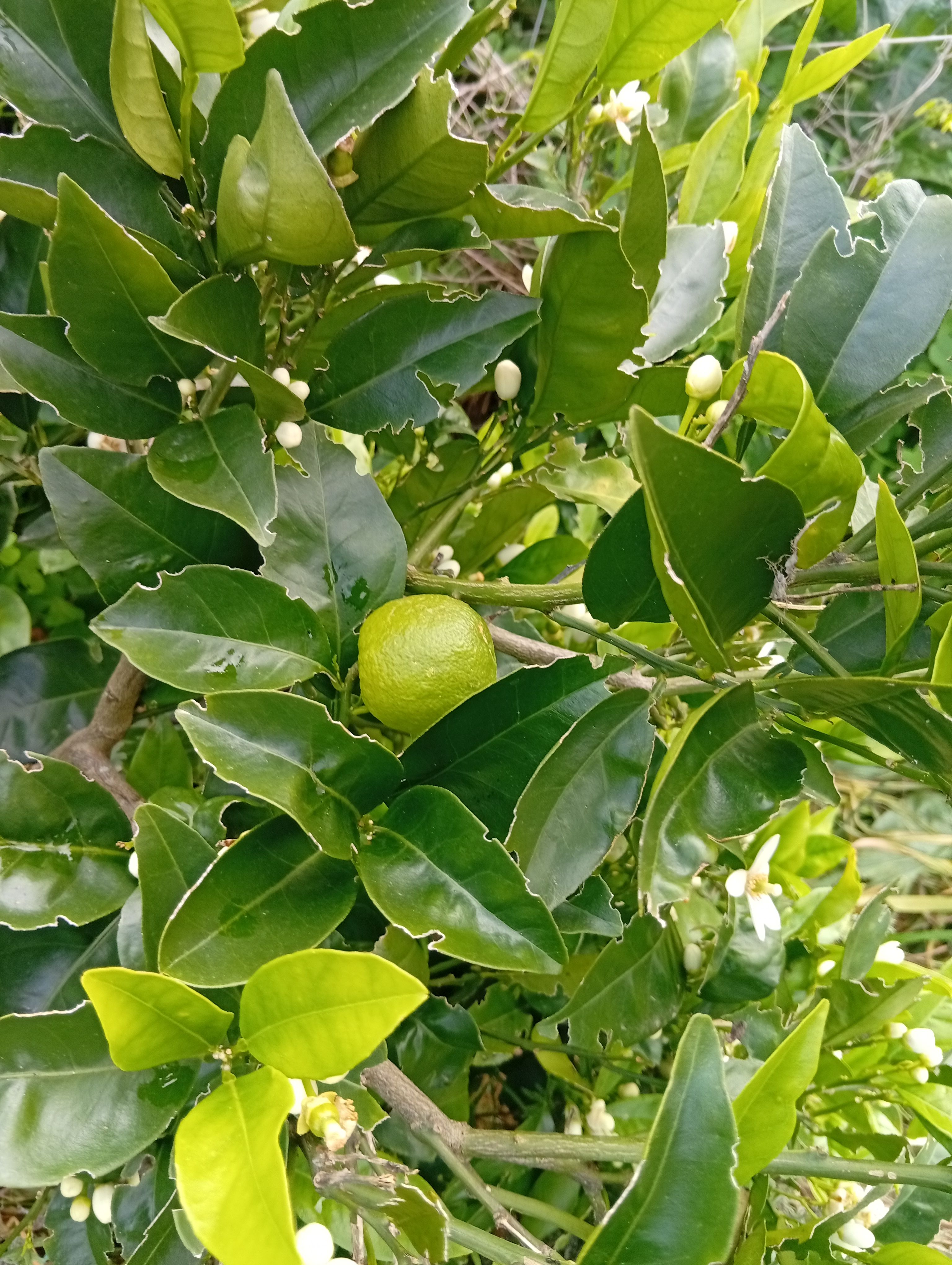
Field record of syntropic density and soil cover after 3 years.
How and why I cut: redistributing light, returning biomass to the soil and following plant response.
| Species | Main Functions |
|---|---|
| Cork Oak | Structural shade, microclimate, deep roots, wildlife shelter |
| Holm Oak | Structural shade, acorn production, ecosystem stability |
| Carob Tree (Ceratonia siliqua) | Long-term canopy, fruit and high drought resistance |
| White Poplar | Water pump, fast biomass, soil stabilisation |
| Willow | Water control, biomass, deep rooting |
| Hackberry | Mediterranean structural tree, bird food, natural regeneration |
| Species | Main Functions |
|---|---|
| Retama (Retama sphaerocarpa) | Deep roots, drought-tolerant nitrogen cycling, dryland soil recovery |
| Spiny broom (Genista scorpius) | Mediterranean legume, nitrogen fixation and shelter |
| Spanish broom (Genista florida) | Nitrogen fixation, succession and biomass; confirm local provenance |
| Tree alfalfa (Medicago arborea) | Nitrogen fixation, biomass and shelter; needs establishment care |
| Subterranean clover (Trifolium subterraneum) | Winter living cover and nitrogen fixation |
| Yellow lupin (Lupinus luteus) | Cover/green manure and biological nitrogen fixation; compatible soil only |
| Judas tree (Cercis siliquastrum) | Flowers, structure and biodiversity; not counted as a nitrogen fixer |
| Eucalyptus (Eucalyptus spp.) | Conditional support/biomass only; never a core species, never dominant, and subject to water, fire and control assessment |
| White Poplar (Populus alba) | Riparian/high-water option only; use near infiltration lines or a high water table |
| Willow (Salix spp.) | Water-line biomass; not a general dryland species |
| European Hackberry (Celtis australis) | Large tree for deep/fresh soils; use only in suitable microclimates |
| Chinaberry (Melia azedarach) | Exotic and potentially invasive; excluded from the core recommendation |
| Casuarina (Casuarina equisetifolia) | Excluded from the normal outdoor recommendation; coastal/subtropical and frost-sensitive |
| Moringa (Moringa oleifera) | Greenhouse/experimental only; frost-sensitive |
| Ora-pro-nobis (Pereskia aculeata) | Greenhouse/very protected microclimate only; frost-sensitive climber |
| Lemongrass (Cymbopogon citratus) | Irrigated/experimental biomass; burns back with frost |
| Species | Main Functions |
|---|---|
| Olive Tree | Olive oil, ecological stability, longevity |
| Fig Tree | Fruit, wildlife food |
| Almond Tree | Dried fruit, pollinator attraction |
| White Mulberry | Fruit, fast biomass |
| Loquat | Early fruit; sheltered position and establishment water |
| Pear Tree | Fruit; suitable cultivar, deep soil and available water |
| Peach Tree | Fruit; conditioned by water and soil |
| Apricot Tree | Fruit; drainage, establishment water and flowering frost risk |
| Species | Functions |
|---|---|
| Pomegranate | Fruit, pollinators |
| Strawberry Tree | Fruit, pollinators |
| Orange Tree | Sub-canopy fruit; regular irrigation and shelter |
| Mandarin Tree | Sub-canopy fruit; irrigation and frost protection |
| Lemon Tree | Sub-canopy fruit; high water demand |
| Tagasaste (Cytisus proliferus) | Medium layer nitrogen fixer; coppice 2–3 times a year for biomass |
| Myrtle | Wildlife shelter, medicinal |
| Mastic Tree | Drought resistance, biodiversity |
| Buckthorn | Wildlife food |
| Mediterranean Buckthorn | Natural regeneration |
| Dorycnium | Ground cover, soil protection |
| Cistus | Pioneer, moisture retention, medicinal resin |
| Fennel (Foeniculum vulgare) | Tall flowering herb, beneficial insects |
| Mullein (Verbascum spp.) | Tall flowering herb, cover and beneficial insects |
| Species | Functions |
|---|---|
| Lavender | Pollinators, insect repellent |
| French Lavender | Pollinators |
| Rosemary | Pollinators, medicinal |
| Oregano | Pollinators, culinary |
| Thyme | Pollinators, culinary |
| Species | Functions |
|---|---|
| Vetiver | Erosion control, water infiltration, deep roots |
| Species | Functions |
|---|
| Species | Functions |
|---|---|
| Mallow | Nutrient mineralisation |
| Sowthistle | Fast biomass |
| Thistle | Deep roots, soil decompaction |
| Dandelion | Mineral mineralisation |
| Plantain | Medicinal, soil improvement |
| Clover (yellow) | Nitrogen fixation, living cover |
The entries below record dated interventions and observations at Wild Alentejo. Outcomes depend on the specific conditions of each period.
First intervention: removal of invasive vegetation, soil analysis and installation of solar-powered drip irrigation system.
Installation of fast-growing pioneers (Melia, Poplar, Mulberry, Eucalyptus) and climax species (Carob, Cork Oak, Loquat). 40+ species in total.
Pioneers are pruned for the first time, returning fresh biomass to the soil. Temperature differences between covered and bare-soil areas began to be followed in the field.
13 birds enter rotation in the system. Their integration is followed as a management hypothesis for redistributing organic matter, without assuming automatic effects on pests, fertility or soil disturbance.
First fruits harvested. There are visible signs of soil activity, including earthworms and spontaneous cover. The system still requires observation, pruning, replacement and water decisions.