Birds · sound
BirdNET can suggest an initial identification from an audio recording. The recording, time, habitat and repeated observation help show whether that hypothesis makes sense.
 WILD ALENTEJO
Semi-arid regeneration since 2023
WILD ALENTEJO
Semi-arid regeneration since 2023
Living archive
A growing record of the flora and fauna I encounter in this plot. I am starting small and will only publish real observations, with date, context and level of certainty when available.
Ler em portuguêsBirds heard at dawn, spontaneous plants, insects, fungi, reptiles and other encounters found in the field. This is not an official inventory or a closed list: it is a portfolio of observations that I will build over time.
An app can help start an identification, but it does not turn one photograph or sound into confirmation. Each entry will say whether it is a provisional app identification, a field observation or an externally confirmed reference.
BirdNET can suggest an initial identification from an audio recording. The recording, time, habitat and repeated observation help show whether that hypothesis makes sense.
PictureThis can offer an initial hypothesis for photographed plants. Before I publish an identification with greater confidence, I compare leaves, flowers, habit and context with external references.
Spontaneous plants, trees, shrubs, flowers and fungi observed in the plot.
Birds seen or heard, with date, sound or image context when available.
Pollinators, decomposers and other small encounters worth recording.
Reptiles, amphibians, mammals or signs of presence, only when carefully observed.
Each entry begins with an observation in the field. Identification may change when there is a better photograph, sound, repeated observation or external reference.
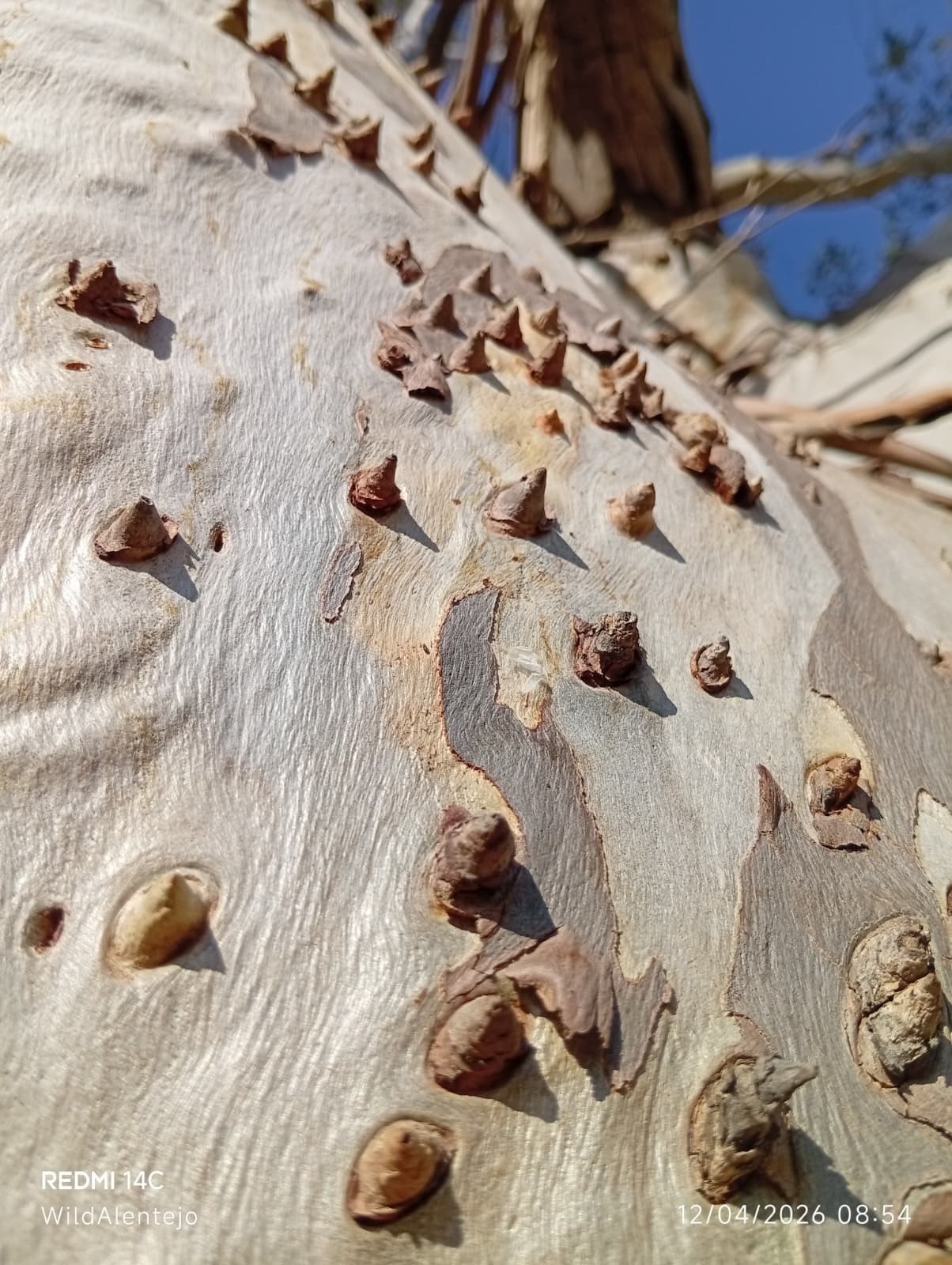
Eucalyptus globulus / Eucalyptus camaldulensis
Veteran eucalyptus (~80 years old) showing strong response to water stress, with rigid thorn-like projections on the trunk (epicormic bud bases).
General areaLand in Mértola
Confirmed by external referenceProvides biomass for mulch/composting, microclimate creation, windbreak barrier, and pollinator food source; exhibits invasive behavior and releases allelopathic compounds.
Semi-arid Alentejo area, adapted to water stress conditions and deep water extraction.
Exotic species widely introduced and distributed across mainland Portugal.
Not Threatened / Cultivated.
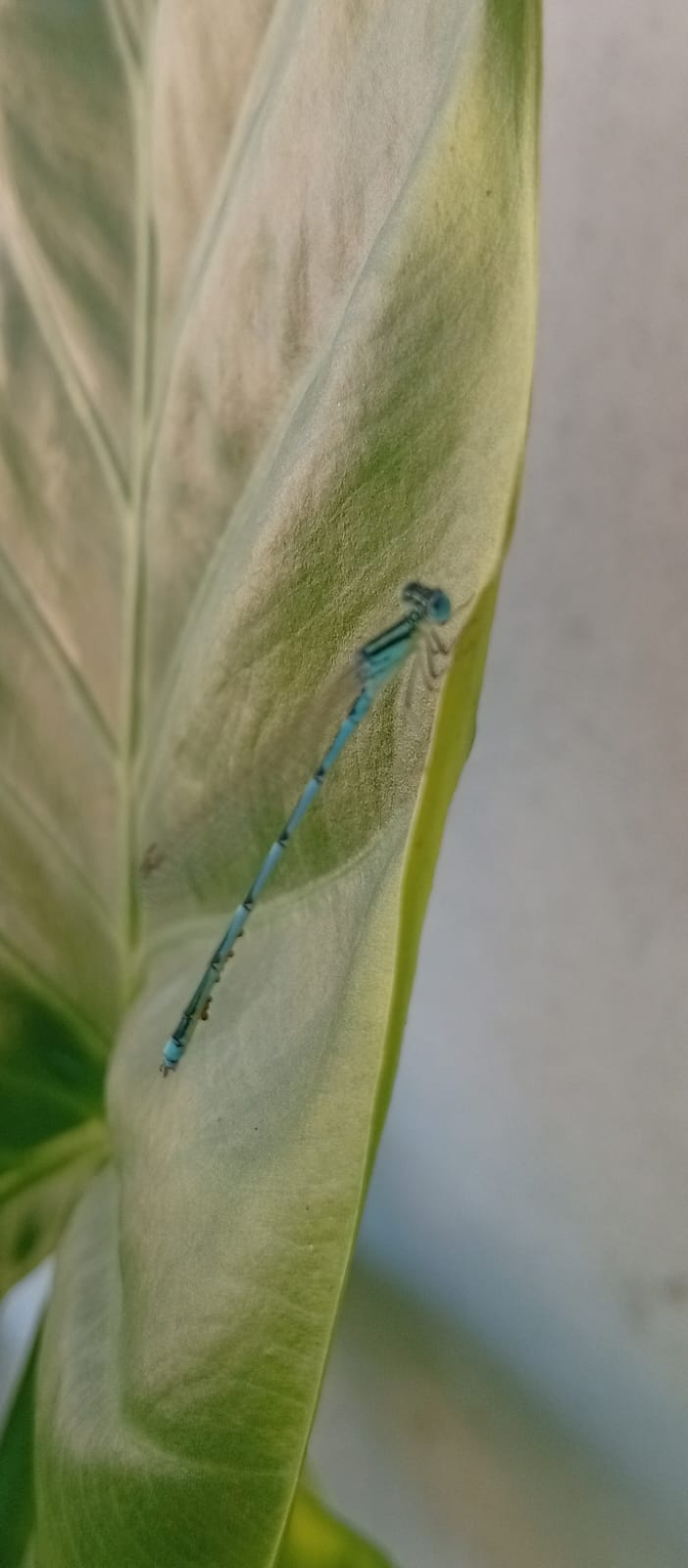
Erythromma lindenii
I found this damselfly resting on a leaf by my front door.
General areaLand in Mértola
Provisional app identificationIn its juvenile stage it lives in water and hunts small invertebrates; as an adult it hunts small insects in flight.
It is associated with vegetated lakes, reservoirs, canals and other water bodies; it also occurs in flowing water and large, well-oxygenated standing water.
It is described as well distributed across mainland Portugal.
Europe: Least Concern (LC).
Where possible, each record will include: photograph or audio, common and scientific name, date or season, general project area, identification method, certainty level and a short observation note. Exact locations of species or sensitive points are not published.